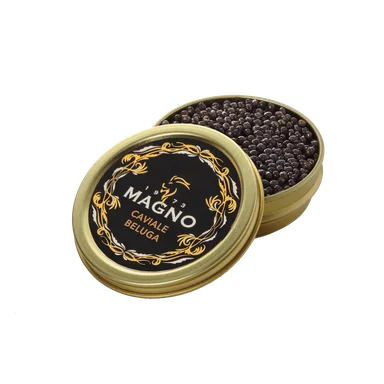

Which sturgeon produces Beluga?
Beluga caviar comes from the roe of Huso huso. The name identifies a species, rather than a brand or a country of production. Historical associations with the Caspian and Black Sea basins do not establish the origin of a modern tin: batch information is needed for that.
What does it taste like?
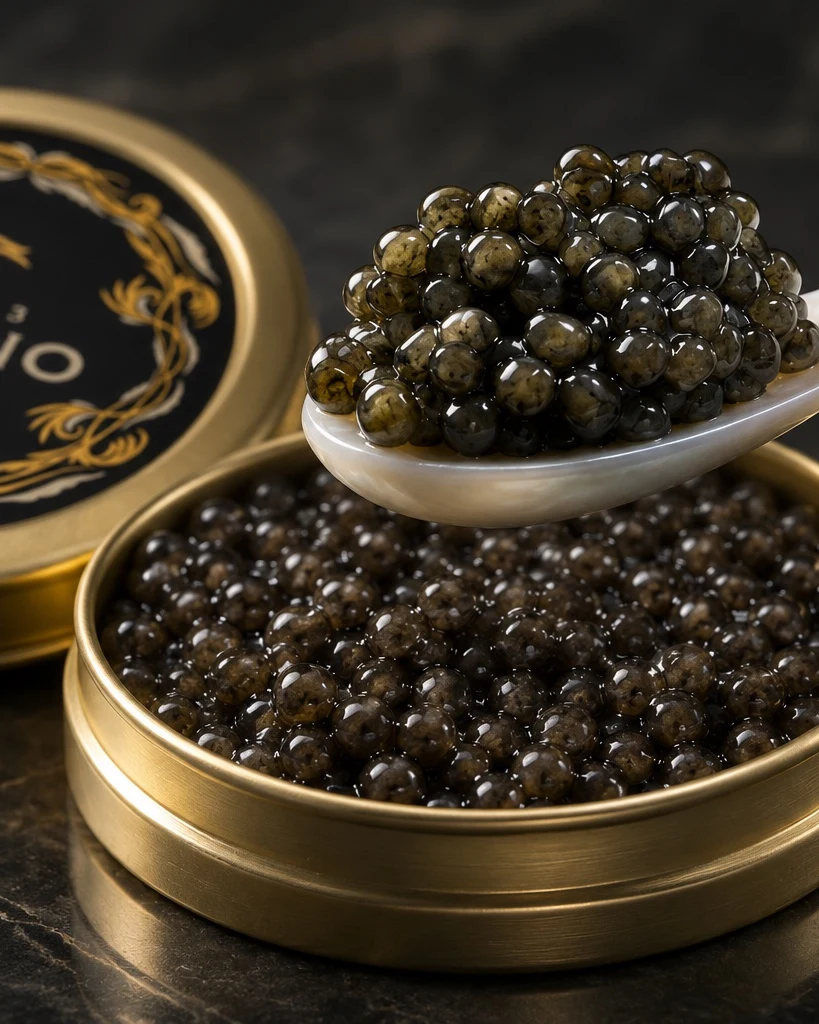
Magno’s Beluga selection is described as soft and silky, with a delicate marine character. Its eggs show shades of grey, although colour and size can vary. Photographs alone cannot establish quality: handling and storage also shape the experience.
For a first taste, try a small amount without assertive accompaniments. Let the eggs open gently on the palate and consider length, balance and the impression of salt. An attentive tasting tells you more than an absolute ranking.
Beluga, Ossetra and Sevruga
These names refer to different species or types. Beluga means Huso huso; Sevruga is associated with Acipenser stellatus; Ossetra, also written Asetra, is traditionally linked to Russian sturgeon, Acipenser gueldenstaedtii. Always check the declared species on the individual tin, particularly where hybrids or commercial names are involved.
They are not simply three levels from worst to best. Someone who enjoys a different intensity or texture may prefer another caviar. Compare clearly identified products served under similar conditions.
Why is Beluga expensive?
Farming, sturgeon maturation, egg selection, processing and refrigerated handling all contribute to cost. A high price alone cannot prove authenticity or quality. Begin with species identification, traceability and storage conditions.
Is it a health food?
Caviar is a food to savour, rather than a remedy or supplement. It contains fish and is salted. Consult the tin’s ingredients and nutritional information for individual dietary requirements; gastronomic value should not be confused with a health claim.