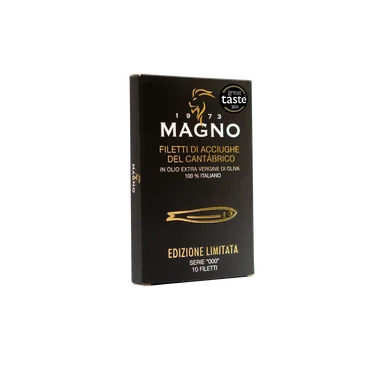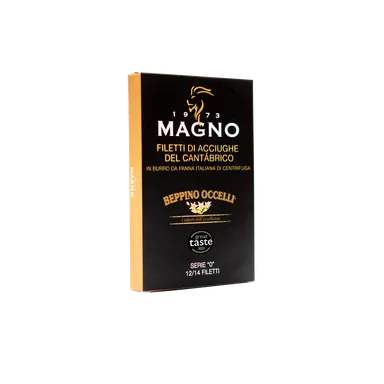

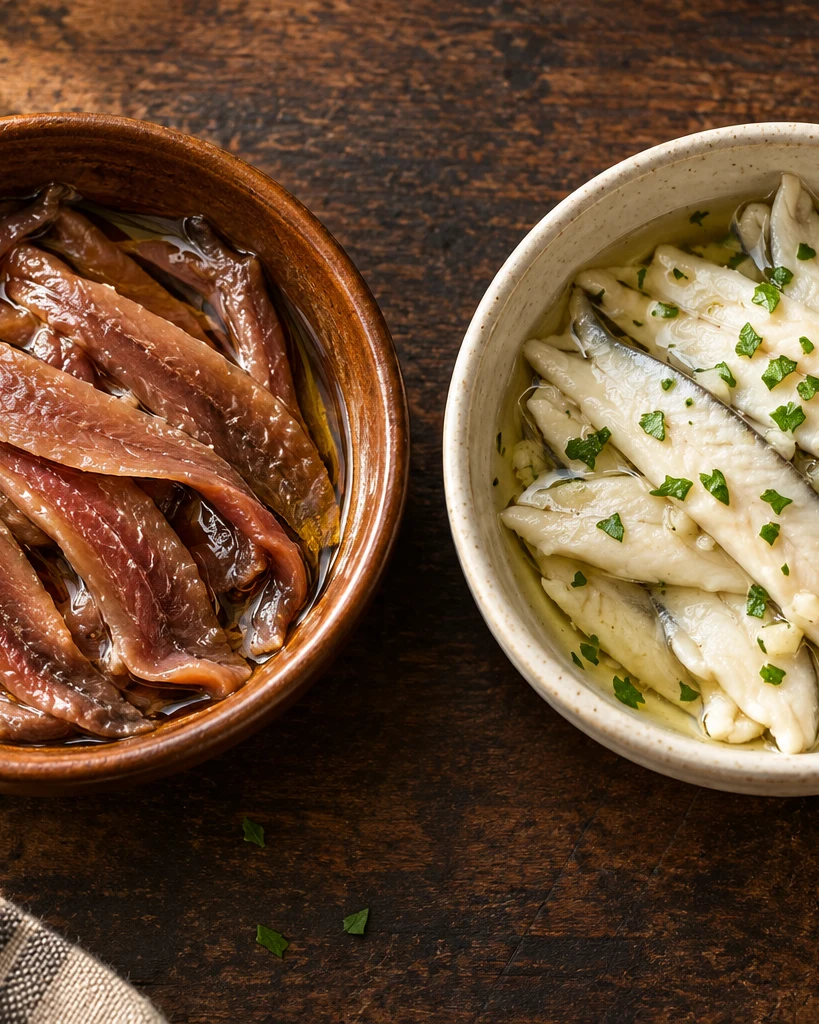
At a food counter or on a shop page, similar names can refer to very different preparations. In Italian, alici and acciughe are common names for the same fish; in culinary usage, however, the context may suggest fresh fish, salt-packed fish or a prepared product. The name alone is not enough: you need to understand what is in the pack.
Fish, origin and recipe
“Cantabrian” refers to a geographical origin. “Salt-packed”, “in oil” and “in butter” describe preparation or the medium accompanying the fillet. A pack can therefore include several correct pieces of information in its name, each serving a different purpose.
It is not useful to automatically rank Cantabrian anchovies above Sicilian anchovies or other origins, as though provenance always guaranteed a better result. Compare products prepared in similar ways and read the label. Raw material, cleaning, maturation and storage contribute to the experience alongside the fishing grounds.
Salt-packed or ready-prepared fillets?
Salt-packed anchovies may need cleaning and preparation before use. Prepared fillets in oil are a different offering, to be used according to the instructions on the pack. Do not apply the same procedure used for desalting fish to a ready-prepared fillet: you could unnecessarily alter its texture and flavour.
What about boquerones?
In Spanish culinary usage, boquerones en vinagre are marinated anchovies, distinct from fillets matured in salt. The result on the plate is different: they are not simply “less salty anchovies”. If following a recipe, consider the preparation it requires instead of swapping one product for another without adjusting the seasoning.
Choose according to use
For a fillet tasting, look for a ready-prepared pack and serve it with simple accompaniments.
For a traditional preparation to finish in the kitchen, carefully read the instructions for salt-packed anchovies.
For a butter-based aperitif, choose a product that declares that ingredient.
For a recipe requiring boquerones, check that you are buying the marinated preparation.
How to compare them at the table
Serve different products on separate plates and tell guests about the ingredients. Taste them without additions first, then with bread or other accompaniments. Do not immediately add vinegar, lemon and salt: a preparation may already contain them, and extra seasoning can mask the producer’s work.
Start with the 000 Cantabrian fillets and compare them with anchovies in butter. This compares two ways of bringing fillets to the table, rather than ranking seas or traditions.
Raw and marinated preparations require specific food-safety procedures: do not treat marinating as equivalent to cooking. Understanding the differences between products also helps avoid transferring instructions from one pack to another.