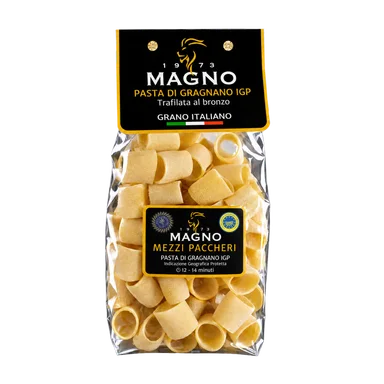

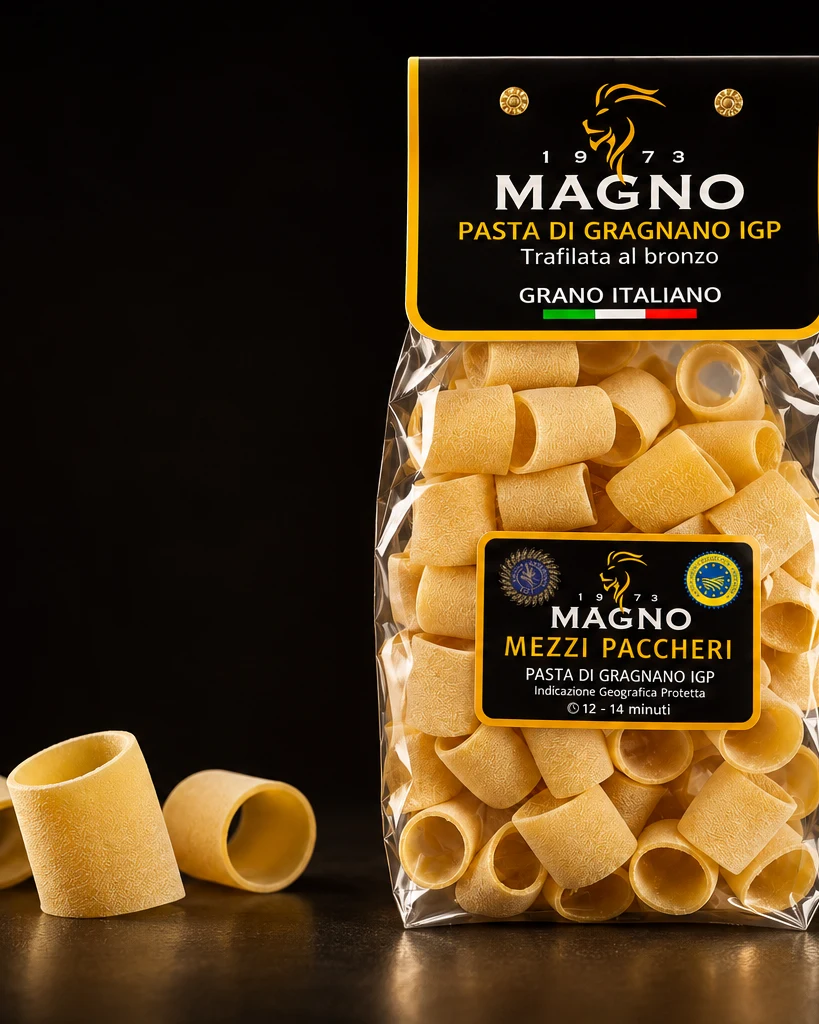
Start with the label
Look for the full Pasta di Gragnano PGI designation and the European protected geographical indication symbol. Check the producer, ingredients, net weight, batch and best-before date. An evocative picture of the region or the word “artisan” cannot replace this information.
Read wheat origin and production details separately. Organic status needs its own indication; it does not follow automatically from PGI certification. Semolina pasta contains gluten, so always check the actual label for dietary requirements.
Comparing producers and reviews
Reviews are most useful when they name a particular shape, explain the recipe and describe how the pasta behaves when finished in the sauce. A broad claim about the “best pasta maker” offers less guidance for a specific meal.
Compare verifiable information: declared ingredients, drawing method, shape, quantity and storage instructions. A producer’s history adds context, but does not replace tasting. A rough surface suggests a production style; it is not sufficient proof of authenticity.
Working out the price per kilogram
Divide the pack price by its weight in kilograms. For a 500 g pack, the kilogram price is twice the pack price. Consider delivery charges, promotions and minimum order quantities separately: the lowest unit price does not always produce the best-value basket.
Ordering online
Check current stock, delivery timing and shipping conditions before ordering. Inspect the packaging on arrival. If buying a gift, choose shapes that match the recipient’s cooking habits as well as the occasion.
Choosing from Magno
Magno’s collection includes long and short shapes. The short, wide 500 g Mezzi Paccheri have a textured surface suited to seafood or enveloping sauces. Consult the product page for current price and availability.