
Discussions of Pata Negra often include names such as Jabugo, Guijuelo, Dehesa de Extremadura and Los Pedroches. These are useful geographical references for Iberian ham, but they are not interchangeable names for the product. To understand its origin, read the individual label instead of attributing the characteristics of one region to the entire category.
A landscape before a name
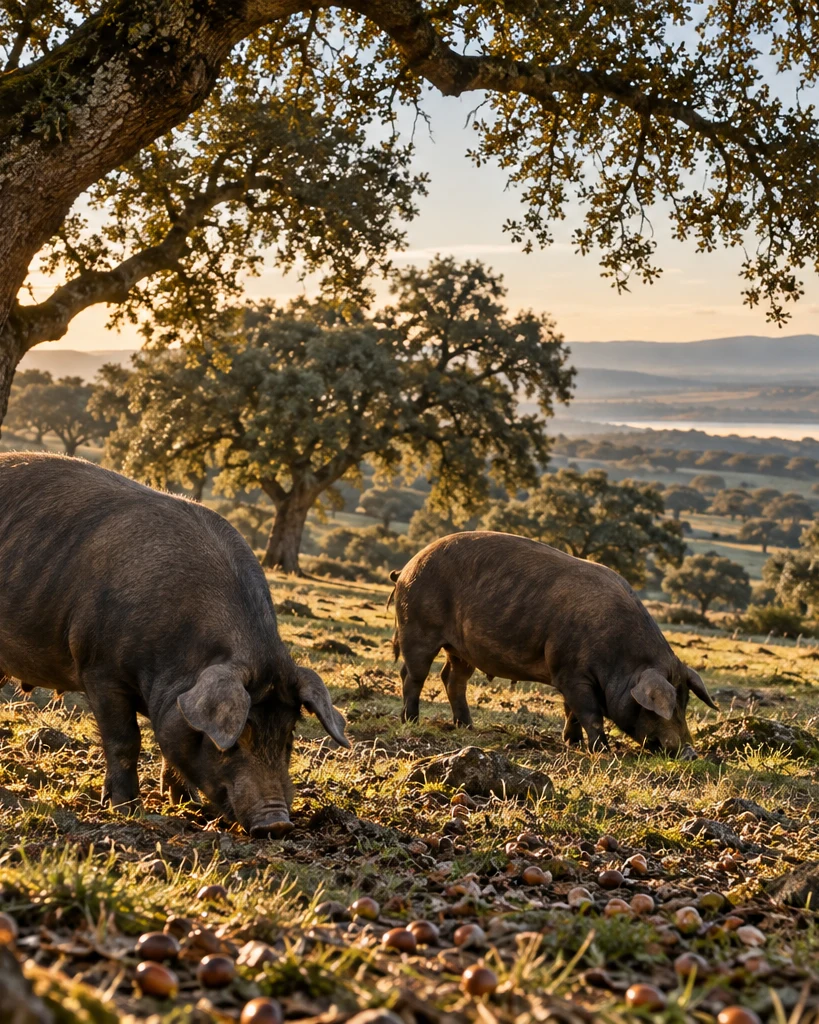
The dehesa is an agroforestry landscape of the Iberian Peninsula, also associated with rearing Iberian pigs. Acorns, grazing and animal management are part of its production story. That story should not become a generic certificate, however: assess each pack through its designation and traceability.
The history of ham also stems from the need to preserve meat with salt and time. Today this processing heritage exists alongside precise controls and rules. “Traditional” describes a history, but does not by itself communicate breed, feeding, ageing time or certified origin.
Four names to distinguish
The Spanish Ministry lists Jabugo, Guijuelo, Dehesa de Extremadura and Los Pedroches among Iberian ham designations. Each has its own specification: a seller mentioning a town does not, by itself, establish that a product belongs to a PDO.
Region: identifies a place and its production context.
Protected designation: requires compliance with a specification and the prescribed identification.
Brand: identifies a commercial offering or a producer.
Category: describes product characteristics under the applicable rules.
Why there is no automatic ranking of regions
Two hams from the same region can offer different experiences. Cut, stated ageing, storage and service all influence tasting. An absolute ranking may therefore be less useful than comparing two actual packs with comparable information.
How to use this information when choosing
Start with the complete designation shown on the product.
Look for any PDO mark and check which designation it refers to.
Distinguish certified origin from the address of the operator who packs or sells it.
Assess the format against the number of people and occasions of use.
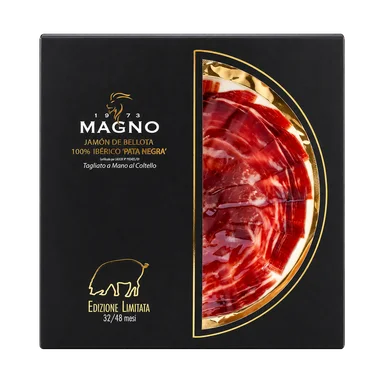
For a first tasting, a pack of hand-carved Pata Negra Oro lets you focus on texture and flavour. Read its product page for its actual characteristics: this regional guide does not attribute a PDO to the product mentioned.
For more information about designations, consult the official overview of quality-designated hams. The aim is to recognise the information, not to choose a place simply because its name is familiar.